Showing posts with label dr. tim scott. Show all posts

January 29, 2016

PV-10 (Rose Bengal) and the Cancer Immunity Cycle

Takeaways:
  • Provectus collaborators like Moffitt Cancer Center in Tampa, FL and the University of Illinois at Chicago ("UIC") in Chicago, IL eventually should independently show that all of the steps in the "cancer immunity cycle," created and popularized by Chen & Mellman in 2013 [1], are present with the company's investigational drug PV-10 (Rose Bengal).
  • This presence might be shown pre-clinically in different solid tumor cancer models (melanoma, colon cancer) as well as clinically in melanoma patients.
[1] Oncology Meets Immunology: The Cancer-Immunity Cycle, Chen et al., Immunity, Volume 39, Issue 1, 1-10

At the 2016 JP Morgan Healthcare Conference, both Bristol-Myers and Roche (Genentech) incorporated cancer immunity cycle visuals in their respective investors presentations. Note that Chen and Mellman are Genentech employees. Bristol-Myers's illustration is on the left, and Roche's is on the right.
Click to enlarge.
Note the differences between the two cycle designs and illustrations.
Click to enlarge.
Notable to me above are (i) Bristol-Myers' explicit mention of the tumor microenvironment, (ii) Bristol's explicit mention of NK cells, (iii) Bristol's expansion of Roche's "T cell killing" into the tumor microenvironment and T cell and NK cell activations, and below (iv) Roche's placement of Amgen's intralesional agent T-Vec (Imylgic).
Click to enlarge.
In July 2014 I created a presentation discussing the cancer immunity cycle steps and where they were present with PV-10 based on the information then available, PV-10, and the Cancer Immunity Cycle.
Click to enlarge.
Click to enlarge.
I revised in draft form the above to potentially explore cycle steps 4, 5 and 6 below with PV-10 based on Moffitt and UIC's work thus far, "Intralesional Rose Bengal in Melanoma Elicits Tumor Immunity via High Mobility Group Box 1" and "PV-10 Induces Potent Immunogenic Apoptosis in Colon Cancer Cells," respectively.
Click to enlarge.
Click to enlarge.

December 28, 2015

Reproducibility, the Hallmark of Western Science

[A post written and published January 18, 2016 but backdated to December 28, 2015, the date when I sent the draft article below to Michael Porter, President of Porter, LeVay & Rose (PLR), Provectus' investor relations firm.

Backdrop:
 (1/19/16) -- As background, Michael called me on December 19th and asked if I could write another article about Provectus for insertion again into MicroCap Review, this time the Winter/Spring 2016 edition. He offered no explicit or implicit compensation to me at the time (nor since) for the proposed work. I agreed to write a draft article, turning it over to him in on the 28th, after which I assumed his Stock News Now/MicroCap Review and/or PLR staff might edit the material or shorten the article prior to printing in or submission to the magazine, respectively.

My draft article, reproduced in its entirely below, appears to have mostly formed the article Reproducibility, the Hallmark of Western Science that appeared on pages 91-94 of the Winter/Spring 2016 edition of MicroCap Review, a magazine published by SNN (although I believe SNN shortened my original article). The last sentence of the magazine articles notes the disclosure: "The company [Provectus] paid consideration to SSN or its affiliates for this article." I believe the consideration was payment to place the articles in the magazine editions. I neither sought nor received compensation (or its implicit or explicit promise) from Provectus, PLR or SNN/its affiliates for my writing.]


Reproducibility, the Hallmark of Western Science

When Provectus Biopharmaceuticals Chairman, CEO and co-founder Dr. Craig Dees, PhD talks about his company’s investigational cancer drug PV-10 (made from century’s old Rose Bengal), he points to a history of reproducible therapeutic features, and reproduced preclinical and clinical results by multiple clinicians and researchers in multiple cancer indications. Craig refers to reproducibility as the hallmark of Western science. If a scientist cannot repeat an experiment’s outcome, and if another scientist cannot replicate that result, the veracity of the original work and claims made from it may be questionable.

Wikipedia’s reproducibility entry provides historical background:
The first to stress the importance of reproducibility in science was the Irish chemist Robert Boyle, in England in the 17th century. Boyle's air pump was designed to generate and study vacuum, which at the time was a very controversial concept. Indeed, distinguished philosophers such as René Descartes and Thomas Hobbes denied the very possibility of vacuum existence. Historians of science Steven Shapin and Simon Schaffer, in their 1985 book Leviathan and the Air-Pump, describe the debate between Boyle and Hobbes, ostensibly over the nature of vacuum, as fundamentally an argument about how useful knowledge should be gained. Boyle, a pioneer of the experimental method, maintained that the foundations of knowledge should be constituted by experimentally produced facts, which can be made believable to a scientific community by their reproducibility. By repeating the same experiment over and over again, Boyle argued, the certainty of fact will emerge.
In drug research and development there has been longtime and widespread lack of reproducibility. A 2011 Wall Street Journal article highlighted this:
This is one of medicine's dirty secrets: Most results, including those that appear in top-flight peer-reviewed journals, can't be reproduced. [1]
A 2012 Reuters story [2] expanded on the two studies mentioned in the Journal article:
During a decade as head of global cancer research at Amgen, C. Glenn Begley identified 53 "landmark" publications – papers in top journals, from reputable labs – for his team to reproduce. Begley sought to double-check the findings before trying to build on them for drug development. Result: 47 of the 53 could not be replicated” [3]…Scientists at Bayer did not have much more success. In a 2011 paper titled, "Believe it or not," they analyzed in-house projects that built on "exciting published data" from basic science studies. "Often, key data could not be reproduced," wrote Khusru Asadullah, vice president and head of target discovery at Bayer HealthCare in Berlin, and colleagues. Of 47 cancer projects at Bayer during 2011, less than one-quarter could reproduce previously reported findings, despite the efforts of three or four scientists working full time for up to a year. Bayer dropped the projects. [4]
Some in the pharmaceutical industry may not care about irreproducible work. Drs. Arturo Casadevall, MD, PhD and Ferric Fang, MD observed in their 2010 paper:
There may be no more important issue for authors and reviewers than the question of reproducibility, a bedrock principle in the conduct and validation of experimental science…Given the requirement for reproducibility in experimental science, we face two apparent contradictions. First, published science is expected to be reproducible, yet most scientists are not interested in replicating published experiments or reading about them…This leads to a second paradox that published science is assumed to be reproducible, yet only rarely is the reproducibility of such work tested or known. In fact, the emphasis on reproducing experimental results becomes important only when work becomes controversial or called into doubt…The assumption that science must be reproducible is implicit yet seldom tested, and in many systems the true reproducibility of experimental data is unknown or has not been rigorously investigated in a systematic fashion. Hence, the solidity of this bedrock assumption of experimental science lies largely in the realm of belief and trust in the integrity of the authors. [5]
In Rose Bengal, PV-10’s active pharmaceutical ingredient [6], Provectus’ co-founders discovered a small molecule lying around in plain sight of Big Pharma for more than 130 years – from Rose Bengal’s creation by Gnehm in the 1880s [7], to American doctor G.D. Delprat’s anecodatal patient-reported outcomes in the 1920s [8], to Japanese researchers Ito et al.’s preclinical observations of dose-dependent increases in survival in the 1980s [9], to the co-founders’ formal discovery of Rose Bengal’s tumor inhibiting properties in the 1990s [10].

Explaining how PV-10 worked was a secondary consideration for Craig who fervently believed Provectus had a ready-made drug product from the outset that worked very well. His fact-based belief, however, belied the arduous, not so straightforward, lengthy and opaque FDA drug approval process all drug companies must traverse, irrespective of Craig’s further belief that approval did not require explanation of mechanism. More daunting was the reality of attempting to bring to market the chemical-oriented cancer therapy of this forgotten compound that had not only an unappreciated treatment delivery route (intratumoral or intralesional), but also two unrecognized mechanisms of action (one local and one systemic).

Craig and his fellow Provectus co-founders, President Dr. Timothy Scott, PhD and CTO Dr. Eric Wachter, PhD, were outsiders to the pharmaceutical industry at the outset of this journey. Hailing from Tennessee’s Oak Ridge National Laboratory, a U.S. Department of Energy multi-program science and technology facility with a rich history of discovery and innovation, they had been technology inventors and R&D 100 Award winners [11]. But if, as Casadevall and Fang wrote, the value of science is inextricably linked to the integrity of the scientists and researchers experimenting on it, and if reproducibility, according to the Journal, Reuters and others [12], is a fundamental challenge for the pharmaceutical industry, how could Provectus’ outsiders convince the FDA, the medical community, Big Pharma, healthcare-focused Wall Street, biotechnology investors, and the media of the veracity of their claims about PV-10 and its potential groundbreaking therapeutic benefits for treating solid tumor cancer?

One way was to generate more data that further argued for PV-10’s clinical value proposition. Another was to conclusively demonstrate the reproducibility of Rose Bengal therapeutic benefit.

Provectus presented preliminary full study data of its Phase 2 trial of PV-10 in patients with advanced melanoma at the Melanoma 2010 Congress.[13] Final data were presented at the European Society for Medical Oncology 2012 Congress.[14] A 2015 peer-reviewed article about the data was published in the Annals of Surgical Oncology:
For target lesions, the best overall response rate was 51%, and the complete response rate was 26%. Median time to response was 1.9 months, and median duration of response was 4.0 months, with 8% of patients having no evidence of disease after 52 weeks. Response was dependent on untreated disease burden, with complete response achieved in 50% of patients receiving PV-10 to all of their disease. Response of target lesions correlated with bystander lesion regression and the occurrence of locoregional blistering. Adverse events were predominantly mild to moderate and locoregional to the treatment site, with no treatment-associated grade 4 or 5 adverse events. [15]
Eric, who has led all aspects of Provectus’ clinical development program, met with the FDA in 2010 for the first of three end-of-Phase 2 meetings related to the company’s melanoma work (the others were held in 2011). He was told a consensus Phase 3 trial randomized against a control was necessary. [16] Eric continued to collaborate with the FDA on PV-10’s initial pathway to approval, ultimately reaching a 2013 agreement with the Agency on the indication of locally advanced cutaneous melanoma (Stage III disease). [17] Despite denying Provectus’ request in 2014 for breakthrough therapy designation for this indication [18], the FDA subsequently allowed the company’s pivotal Phase 3 trial that began treating patients in 2015. [19] The hypothesis of this trial is that the spread of melanoma from Stage III to Stage IV may be forestalled or prevented if all disease is treated with PV-10.

Provectus presented preliminary initial study data of the company’s Phase 1 trial of PV-10 in patients with hepatocellular carcinoma and cancer metastatic to the liver at the 2015 European Society for Medical Oncology World Congress on Gastrointestinal Cancer [20]:
For the current study two cohorts of patients, one with non-resectable HCC (n=6 patients overall, 7 tumors injected) and the second with other forms of cancer metastatic to the liver (n=7, 3 colorectal tumors, 2 non-small cell lung, 2 melanoma and 1 ovarian) underwent a single percutaneous injection of PV-10 guided by CT to one target lesion in the liver at least 1 cm in diameter…For the first analysis of five patients (six tumors) who had longer-term assessment, two patients showed no evidence of disease at more than 40 months follow-up according to RECIST and EASL criteria… Furthermore, at up to 54 months follow-up 10 out of the initial 13 patients were alive, with one death due to cardiac comorbidity, one to serious adverse events and one to HCC progression. [21]
Returning to melanoma, in 2015 Provectus began a Phase 1b trial combining PV-10 and Merck & Co.’s approved immune checkpoint inhibitor Keytruda (pembrolizumab) in patients with advanced melanoma (Stage IV disease). The approach of this combination study, where not all tumor burden is accessible to PV-10 injection, would be for the latter to enhance the systemic immune response generated by the former. PV-10 elicits a functional anti-tumor T cell response in patients, while Keytruda increases the anti-tumor function of their T cells.

Starting in 2010 Eric also commenced a parallel effort to elucidate PV-10’s dual mechanisms of action. His goals were to fully validate the so-called bystander effect, whereby non-injected, distant tumors shrank or were completely destroyed as a result of injecting tumors elsewhere, and to assess immune markers in patients’ peripheral blood and tumor tissue. [22]

During an ASCO 2010 investor presentation, Eric presented about the bystander effect, which is a tumor-specific response brought on by PV-10 treatment:
Response in untreated proximal and visceral lesions consistent with immunologic process. PV-10 chemoablation yields immediate reduction in tumor burden. Ablation appears to recruit immune cells to exposed tumor antigens. [23]
He sought to have a translational cancer research organization undertake arm’s length reproduction of Craig’s original murine model work, and what was being clinically observed in human trials, to independently establish PV-10’s bona fides. This work commenced in 2011 when Provectus agreed to have Tampa, Florida’s H. Lee Moffitt Cancer Center & Research Institute carry out this necessary initial research (after also considering MD Anderson Cancer Center in Houston, Texas). In 2014 Eric added the University of Illinois at Chicago to his list of stringers.

In the early-2000s, Craig Tim and Eric, while at Photogen (the precursor company to Provectus) and when they believed Rose Bengal required photoactivation to elicit its therapeutic benefit, published that the physical chemistry of the small molecule generated both local and systemic responses in multiple cancer indications [24] [25] [26]. A short time thereafter Provectus’ co-founders had their Eureka moment upon realizing Rose Bengal did not require light activation.

PV-10’s truly multi-faceted clinical value proposition comprises safety and sparing of tissue; local and systemic effectiveness, the investigational drug’s two-prong approach to fighting cancer; multi-cancer indication viability; synergy in combination with other cancer therapies; supportiveness of patient compliance; ease of use, re-use, shipment, storage and handling; and globally affordability. The key aspect of this proposition is the drug compound’s local effect of tumor ablation upon injection (the first of its dual mechanisms of action) that produces the systemic effect of a tumor-specific immune response and eventually anti-tumor immunity (the second mechanism).

At the 2012 annual meeting of the Society for Immunotherapy of Cancer, Craig, Tim, Eric and others presented:
PV-10 (10% Rose Bengal in 0.9% saline) has been used to chemoablate a wide variety of tumors in human clinical trials and in animal patients when delivered by intralesional (IL) injection…Tumor models examined include: hepatocellular carcinoma (HCC), melanoma, pancreatic and colon adenocarcinomas. PV-10 was found to chemoablate all tumors tested with no apparent side effects…Untreated tumors in the opposite flank of mice completely regressed or were reduced in size in immunocompetent mice (i.e., 8/8 untreated HCC tumors)... [27]
At the 2013 annual meeting of the American Association for Cancer Research, Moffitt Cancer Center presented:
PV-10 is a 10% solution of Rose Bengal that is currently being examined as a novel cancer therapeutic. In melanoma patients, intralesional injection (IL) of PV-10 has led to regression of injected lesions as well as distant metastases… In BALB/c mice bearing MT-901 breast cancer, injection of PV-10 led to regression of injected and untreated contralateral subcutaneous lesions (p<0.05 compared to IL-PBS-treated mice)…MT901-bearing mice treated with IL-PV-10 demonstrated enhanced IFN-gamma production (992 ± 453 pg/ml) compared to splenocytes from PBS-treated mice (174 ± 105, p<0.05)…Treatment of the subcutaneous lesion with a single injection of IL-PV-10 led to regression of the injected lesion as well as distant B16 melanoma lung metastases. In B16-bearing mice, treatment with IL-PV-10 led to the induction of T cells that produced IFN-gamma in response to B16 tumors but not irrelevant tumor (p<0.05) and demonstrated specific lysis of B16 (p<0.01 compared to T cells isolated from PBS-treated mice). [28]
A member of the Moffitt PV-10 study team called iFN-gamma/γ the “quintessential antitumor cytokine”. [29] Cytokines are the messengers of the immune system; in cancer therapy cytokines are used to enhance immunity. [30]

At the 2015 annual meeting of the Society of Surgical Oncology, the University of Illinois at Chicago presented:
Early phase studies using intratumoral injection of PV-10 (10% Rose Bengal) have shown regression of in-transit melanoma deposits and non-treated bystander lesions. The effects of PV-10 on colorectal cancer (CRC) cells and established tumors is unknown…To determine an underlying immune mechanism, a murine CT26 syngeneic CRC model was utilized…Treatment of subcutaneous tumors with a single injection of intralesional PV-10 led to near complete responses in all animals within days of exposure and significant regression of the injected lesions compared to controls (n=6 per group, p=0.027). PV-10 treatment was associated with occasional bystander responses in contralateral untreated tumors and trended towards a decreased rate of growth in these lesions. Splenocytes isolated from tumor bearing mice treated with PV-10 displayed enhanced tumor-specific IFN-γ production compared to splenocytes from PBS-treated mice (p = 0.025). [31]
Moffitt Cancer Center and the University of Illinois independently, and independently from each other, reproduced Craig’s original work, which first demonstrated PV-10’s two-prong approach to successfully fighting cancer in multiple indications: Tumor ablation, the local effect of destroying injected tumors; a tumor-specific immune response, the systemic effect of destroying non-injected tumors; tumor-specific IFN-gamma/γ production; and multi-indication viability in at least melanoma, breast cancer and colorectal cancer.

Other affiliated and independent researchers around the world have noted the cancer-fighting benefits of Rose Bengal. Their observations and conclusions have been consistent with those of Craig (US), Moffitt Cancer Center (US) and the University of Illinois (US) as well as Delprat (US) and Ito (Japan): Koevary (2012, ovarian cancer cells, US) [32], Nascimento et al. (2013, melanoma cells, Australia) [33], Tan et al. (2013, clinical refractory scalp sarcoma, Australia) [34], Zamani et al. (2014, gastric cancer cells, Iran) [35], and Panzarini et al. (2014, cervical cancer cells, Italy) [36].

Consider Wikipedia’s reproducibility entry’s opening:
Reproducibility is the ability of an entire experiment or study to be duplicated, either by the same researcher or by someone else working independently. Reproducing an experiment is called replicating it. Reproducibility is one of the main principles of the scientific method.
Provectus management has some way to go in their stewardship of the company to converge its market capitalization with its intrinsic value. There should be no disagreement, however, about the veracity of their claims about Rose Bengal/PV-10 and its therapeutic benefits for the treatment of solid tumor cancer. After all, Craig, Tim and Eric’s original work achieved [global] reproducibility, the hallmark of Western science.


[1] Scientists' Elusive Goal: Reproducing Study Results, Gautam Naik, The Wall Street Journal, December 2, 2011
[2] In cancer science, many "discoveries" don't hold up, Sharon Begley, Reuters, March 28, 2012
[3] Drug development: Raise standards for preclinical cancer research, Begley et al., Nature 483, 531–533 (29 March 2012)
[4] Believe it or not: how much can we rely on published data on potential drug targets? Prinz et al., Nature Reviews Drug Discovery 10, 712 (September 2011)
[5] Reproducible Science, Casadevall et al., Infect Immun. 2010 Dec; 78(12): 4972–4975
[6] PV-10 is the drug product. Rose Bengal is the drug substance.
[7] Gnehm R.Ueber Tetrachlorphtalsäure. Justus Liebigs Annalen der Chemie, 1887; 238: 318-338
[8] The Rose Bengal test for liver function, Delprat, G.D. et al., The Journal of Laboratory and Clinical Medicine, Volume 16, Issue 9, 923-925
[9] Induction of thyroid tumors in (C57BL/6N x C3H/N) F1 mice by oral administration of 9-3',4',5',6'-tetrachloro-o-carboxy phenyl-6-hydroxy-2,4,5,7-tetraiodo-3-isoxanthone sodium (Food Red 105, rose bengal B), Ito et al., J Natl Cancer Inst. 1986 Jul;77(1):277-81
[10] American Society of Clinical Oncology, 2010 Annual Meeting and Rose Bengal: From a Wool Dye to a Cancer Therapy, Alexander, W., Pharmacy & Therapeutics. 2010 Aug; 35(8): 469-474, 478
[11] Oak Ridge National Laboratory Awards and Appointments for 1996, see http://web.ornl.gov/info/ornlreview/rev30-12/text/awards.htm
[12] E.g., Should we believe published scientific research? Luke Timmerman and Meg Tirrell, Stat and Signal Podcast, December 3, 2015
[13] Provectus Reports Full Phase 2 Study Data on PV-10 for Metastatic Melanoma, November 5, 2010
[14] Immuno-chemoablation of metastatic melanoma with intralesional rose bengal, European Society for Medical Oncology 2012 Congress, October 2012
[15] Phase 2 Study of Intralesional PV-10 in Refractory Metastatic Melanoma, Thompson et al., Annals of Surgical Oncology, July 2015, Volume 22, Issue 7, pp 2135-2142
[16] Provectus Reports on Successful End-of-Phase 2 Meeting with U.S. FDA and Gains Clarity for Licensure of PV-10 for Metastatic Melanoma, April 29, 2010
[17] Provectus's PV-10 Path to Initial Approval in U.S. Now Clear Per FDA Meeting Minutes, January 24, 2014
[18] Provectus Biopharmaceuticals Inc. Reaffirms Its Commitment to Bringing PV-10 to Market Notwithstanding FDA Decision on Breakthrough Therapy Designation, May 23, 2014
[19] Provectus Biopharmaceuticals Opens Patient Enrollment; Begins Phase 3 International FDA Comparative Clinical Trial of PV-10 for Melanoma, April 15, 2015
[20] Provectus Biopharmaceuticals' Data on PV-10 for Chemoablation of Liver Cancers Presented at ESMO 17th World Congress on Gastrointestinal Cancer, July 2, 2015
[21] ESMO GI: PV-10 shows potential in hepatocellular carcinoma and metastatic liver disease, Janet Fricker, ecancernews, July 7, 2015
[22] ASCO 2010 Investor Briefing Presentation, Clinical Program Overview, Provectus, Dr. Eric Wachter, PhD, slide 39 of 55
[23] Ibid, slide 42 of 55
[24] Immune-mediated regression of tumors and production of anti-tumor immunity induced by chemoablative or photodynamic therapy, Dees et al., Counsel of Research Workers in Animal Disease, Chicago, Illinois, 2001: abstract.
[25] Use of halogenated xanthenes to specifically target diseased tissue, Dees et al., 29th Annual Meeting of the American Society for Photobiology, Chicago, Illinois, 2001: abstract.
[26] Topical Rose Bengal: Pre-Clinical Evaluation of Pharmacokinetics and Safety, Wachter et al. Lasers in Surgery and Medicine. 32:101–110 (2003)
[27] Generation of an Antitumor Response and Immunity Using a Small Molecule Drug (PV-10), Dees et al., J Immunother. Volume 35, Number 9, November–December 2012
[28] Intralesional injection with PV-10 induces a systemic anti-tumor immune response in murine models of breast cancer and melanoma, Pilon-Thomas et al., Cancer Res. April 15, 2013 73; 1248.
[29] Intralesional therapy for metastatic melanoma, Cheryl Guttman Krader, DermatologyTimes, May 14, 2015
[30] See Cytokines and Cancer Therapy by Dr. Jeffrey Weber, MD, PhD
[31] Intralesional Injection of Rose Bengal Induces an Anti-tumor Immune Response and Potent Tumor Regressions in a Murine Model of Colon Cancer, 2015 Society of Surgical Oncology Annual Cancer Symposium, March 2015: abstract
[32] Selective toxicity of rose bengal to ovarian cancer cells in vitro. Koevary, Int J Physiol Pathophysiol Pharmacol. 2012;4:99–107
[33] Rose Bengal - Phototoxicity versus intrinsic cytotoxicity [abstract]. Nascimento et al. Journal der Deutschen Dermatologischen Gesellschaft. 2013;11
[34] Novel use of Rose Bengal (PV-10) in two cases of refractory scalp sarcoma. Tan et al., ANZ J Surg. 2013;83:93
[35] Rose Bengal suppresses gastric cancer cell proliferation via apoptosis and inhibits nitric oxide formation in macrophages. Zamani et al., J Immunotoxicol. 2014;11:367–375
[36] Rose Bengal Acetate PhotoDynamic Therapy (RBAc-PDT) Induces Exposure and Release of Damage-Associated Molecular Patterns (DAMPs) in Human HeLa Cells. Panzarini et al., (2014) PLoS ONE 9(8): e105778

July 27, 2015

Provectus Biopharmaceuticals: Advancing a New Front in the War against Cancer

[A post written and published September 1, 2015 but backdated to July 27th, the date when I sent the draft article below to Michael Porter, President of Porter, LeVay & Rose (PLR), Provectus' investor relations firm.

Backdrop: My draft article, reproduced below, appears to have mostly formed the article Provectus Biopharmaceuticals: Advancing a New Front in the War against Cancer that appeared on pages 6-8 of the Summer/Fall 2015 edition of MicroCap Review, a magazine published by SNN. The article appears to have been reprinted in the Winter/Spring 2016 edition of the magazine. The last sentence of the magazine articles notes the disclosure: "The company [Provectus] paid consideration to SSN or its affiliates for this article." I believe the consideration was payment to place the articles in the magazine editions. I neither sought nor received compensation (or its implicit or explicit promise) from Provectus, PLR or SNN/its affiliates for my writing (or the reprinting).

As background, Michael approached me in April 2015 to write an article about Provectus for insertion into MicroCap Review. He offered no explicit or implicit compensation to me at the time (nor since) for the proposed work. I agreed to write a draft article, turning it over to him in July, after which I assumed his staff and/or he might edit the material prior to submission to the magazine.]


Provectus Biopharmaceuticals: Advancing a New Front in the War against Cancer

Outsiders to the pharmaceutical industry, three award-winning research scientists from the Department of Energy’s East Tennessee-based Oak Ridge National Laboratory embarked on a path of their own in the 1990s to develop a better way to fight cancer. Hailing from the nationally recognized federal government science and technology facility with a rich history of discovery and innovation, these three technology inventors had been searching for a drug candidate capable of killing cancer cells safely, specifically, completely and quickly. By the end of the decade Drs. Craig Dees, PhD, Timothy Scott, PhD and Eric Wachter, PhD had re-discovered what could turn out to be the ideal cancer killer: Rose Bengal, a molecule with a long and diverse medical history. Ironically the compound had lain around in plain sight of the global pharmaceutical industry for nearly 85 years before Dees et al. began their journey of demonstrating Rose Bengal’s cancer fighting potential.

Safely and effectively engaging the body’s immune system and its natural anti-cancer defenses, instead of destroying or misusing them, underscored the Tennessee trio’s approach to defeating the disease. They believed killing cancer tumors in the correct way held the key to successful medical treatment because a proper approach could enable the immune system to stimulate cancer-killing cells throughout the body. Dees, Scott and Wachter eventually founded Knoxville, Tennessee-based Provectus Biopharmaceuticals, Inc. (NYSE MKT: PVCT) in 2002 with the goal of developing Rose Bengal-based drugs to treat cancer. The founders’ vision was to have the company’s lead investigational oncology drug PV-10, an injectable 10% solution of Rose Bengal in saline, employed in the treatment of all solid tumor cancers before, during and after surgery, in combination with other therapeutic agents and therapies, and after all else fails.

Rose Bengal is the active pharmaceutical ingredient in PV-10. A water-soluble dye first created in 1882[1], it is a small molecule that has been used in the clinic for more than a century, as an additive to safranin victoria yellow for ocular pneumococcal infection[2], a stain for visualizing corneal ulcers[3], a marker for impaired liver function[4] and now a cancer therapeutic. Prior to Provectus’ founding Rose Bengal already had an established FDA safety profile as an intravenous hepatic diagnostic called Robengatope®, and as a topical ophthalmic diagnostic under the trade names of Rosettes® and Minims®. Rose Bengal’s therapeutic benefits remained hidden until the 1980s when sufficient quantities were administered orally in preclinical studies carried out by Japanese researchers.[5] Ironically, while investigating the tumorigenicity of red food dye No. 105 (also made from Rose Bengal) they observed dose-dependent survival increases in test mice.

In the view of Dees, Scott and Wachter properly destroying cancer tumors meant killing only tumors and doing so completely, quickly and, very importantly, safely (that is, leaving healthy tissue unharmed). They believed this approach was the only effective way of sustainably stimulating a person’s natural anti-cancer defenses. Instead of bathing the entire body or even parts of it with radiation, or filling the bloodstream with oral or intravenous chemotherapies or present-day immunotherapies, Dees et al. firmly held the position that stimulating the immune system was best achieved through treating tumor tissue by injecting into it a drug capable of destroying the entire tumor as quickly as possible without damaging surrounding healthy cells. Completely also meant everything from visible tumor tissue to occult or hidden cells in and immediately around the injection site. Quickly meant having the drug processed through and excreted from the body in short order. Antigens generated from the tumor destruction caused by drug injection then could be presented to the body’s cells responsible for selecting the best and most relevant antigens in order to encourage cancer-killing cells to replicate themselves throughout the body. Importantly, tumor antigens had to be viewed in context; physical tumor destruction techniques such as heating or freezing tissue destroyed fragile antigens and disrupted their relevant contextual structures. Disruption of cell membranes and removal of lipids, proteins, and complex carbohydrates destroyed the antigens’ context, which is to what immune system cells responded. Thermal destruction denatured potential antigens, changing their chemical structure so that they were no longer representative of the tumor cell. In order to work rapid destruction of tumors had to preserve both antigenic structure and biological context.

Provectus’ lead investigational oncology drug PV-10 has a two-prong approach to fighting cancer. First, the “local effect” of tumor ablation (destruction) sees a patient’s tumor burden rapidly reduced after injection of PV-10 into his or her accessible cancerous lesions. Selective targeting by Rose Bengal minimizes side effects. Unlike many other cancer drugs, PV-10 does not rely on a single pathway to work and also has no known resistance. Second, the “systemic effect” of a tumor-specific immune response causes regression of untreated tumors, potentially prolonging progression-free survival and possibly enabling PV-10’s combination with immunomodulatory drugs and other systemic therapies for use in lesions that are inaccessible to a direct injection.

PV-10’s potential clinical value proposition to patients and their physicians is multi-faceted: It is simple to store, handle, and use and reuse. The drug thus far has shown modest local and transient toxicity that is predominantly confined to the injection site and minimal-to-no systemic toxicity. In regards to local efficacy PV-10 injection may lead to rapid, durable, complete tumor destruction, and induction of antigen release in injected lesions. It may promptly heal injected lesion sites completely after tumor destruction. In regards to systemic efficacy the drug may reliably, reproducibly induce regional and systemic immune effects potentially capable of destroying occult tumor cells, “bystander” lesions and distant metastatic lesions regardless of prior treatments. PV-10 may have multi-indication viability. Clinical trials to date and an ongoing expanded access program have treated more than 240 cancer patients (recurrent breast cancer, hepatocellular carcinoma and metastatic liver cancer, melanoma). It may be orthogonal, potentially having a low risk of clinically relevant drug-drug interactions. The drug may be agnostic, possibly compatible with all disease presentations. PV-10’s pharmacokinetics may be comparable and consistent.

Researchers at Moffitt Cancer Center in Tampa, Florida and the University of Illinois in Chicago have reproduced Dees et al.’s original preclinical work that first demonstrated PV-10’s two-prong approach and ability to fight cancer in multiple indications: e.g., the tumor ablation (the local effect) through the destruction of injected tumors, a tumor-specific immune response through the destruction of non-injected tumors and tumor-specific IFN-γ production in melanoma, breast cancer and colorectal cancer.
 
Provectus’ clinical development program is spearheaded by a pivotal trial currently being conducted in melanoma, and an early stage trial hepatocellular cancer (“HCC”) and metastatic liver cancer. In a Phase 2 trial that formed the basis for the current pivotal Phase 3 trial (registration study), 80 patients with stage IIIB-IV melanoma refractory to a median of six prior interventions received injections into their melanoma lesions up to four times over a 16-week period and were followed for 52 weeks.[6] The overall response rate for the 28 patients who had all their existing melanoma lesions injected with PV-10, was 71% with 50% achieving a complete response. This subgroup of 28 patients who had all their lesions injected achieved a progression free survival of 9.8 months, which according to the Phase 3 trial’s principal investigator Dr. Sanjiv Agarwala, M.D at St. Luke’s Hospital and Health Network of Bethlehem, Pennsylvania compares favorably with historical progression free survivals of less than 2.5 months for systemic chemotherapy dacarbazine and temozolomide.

The company’s current early-stage study of 6 patients with non-resectable HCC (primary liver cancer) and 7 patients with other forms of cancer metastatic to the liver (secondary liver cancer) saw then undergo a single percutaneous injection of PV-10 guided by CT to one target lesion in the liver.[7] At up to 54 months follow-up 10 out of these 13 initial patients were alive, with one death due to cardiac comorbidity, one to serious adverse events and one to HCC progression. Adverse events were generally limited to injection site reactions and photosensitivity and resolved without sequelae, with elevated liver enzymes observed during the first week after treatment. As with melanoma, PV-10 is believed to have a local chemoablative effect in HCC and metastatic liver disease where the agent enters lysosomes causing tumor necrosis that can stimulate immunological effects. Studies in melanoma patients injected with PV-10 have shown increased T cells in peripheral blood following injection including CD8+, CD4+, CD3+ and NKT.

Provectus recently announced the signing of a letter of intent with Boehringer Ingelheim China to collaborate in bringing PV-10 to market in mainland China.


[1] Gnehm R.Ueber Tetrachlorphtalsäure. Justus Liebigs Annalen der Chemie 1887; 238:318–338
[2] Feenstra RPG and Tseng CG. Arch Ophthalmol 1992; 110:984–993
[3] Norn MS. Acta Ophthalmol 1970;48(3):546-559
[4] Delprat GD. Arch Int Med 1923; 32(3):401–410
[5] Ito A, Watanabe H, Naito M, Aoyama H, Nakagawa Y, Fujimoto N. J Natl Cancer Inst 1986 Jul; 77(1):277–81
[6] Janet Fricker, PV-10 delivers greatest effects when all lesions are injected, Pharmiweb.com, October 14, 2014
[7] Janet Fricker, New chemoablative approach for hepatocellular carcinoma and metastatic liver disease, Pharmiweb.com, July 13, 2015

November 1, 2014

Florey, Chain & Heatley⎟Coley⎟sort of, maybe, possibly, conceivably, probably...

‘‘Drugs can only repress symptoms: they cannot eradicate disease. The true remedy for all diseases is Nature’s remedy .... There is at bottom only one genuinely scientific treatment for all diseases, and that is to stimulate the phagocytes. Stimulate the phagocytes. Drugs are a delusion.’’ -- Counsel of physician Sir Bloomfield Bonington in George Bernard Shaw’s 1906 play The Doctor’s Dilemma; the use of the quote comes from the article Dr William Coley and tumour regression: a place in history or in the future by Hoption Cann et al.
▸ Alexander Fleming discovered penicillin in 1928, while the discovery of penicillin's medical use was established more than a decade later by Howard Florey, Ernst Chain and Norman Heatley (source link: Wikipedia).

Penicillin was/is a discovery that changed the course of medicine.

▸ William Coley is a pioneer of cancer immunotherapy (late 1800s), and considered by many to be the "Father of Immunotherapy." According to Wikipedia (see immediately prior link):
"Coley developed the theory that post-surgical infections had helped patients to recover better from their cancer by provoking an immune response. He began to experiment by deliberately causing this phenomenon, injecting bacteria directly into people being treated – but because this had the adverse effect of causing infection he then switched to using dead bacteria."
Hoption Cann et al. (link at the top of the post) write about Coley's work:
"Coley considered several points crucial to a patient’s survival. First and foremost was to imitate a naturally occurring acute infection, and thus, inducing a fever was essential. Injections were optimally administered daily (or every other day) for the first month or two. To avoid immune tolerance to the vaccine, the dosage was gradually increased over time (depending on patient response). The vaccine was injected directly into the primary tumour and metastases, when accessible. Finally, a minimum six month course of weekly injections was followed to prevent disease recurrence." {Underlined emphasis is mine.}
Coley injected the bacteria/vaccine/toxins into cancerous tumors and cancer metastases.

▸ Why then, when writing about cancer immunotherapy and associated approved and investigational checkpoint blockade drugs like Yervoy (anti-CTLA-4, Bristol-Myers), Keytruda (anti-PD-1, Merck), Opdivo (anti-PD-1, Bristol-Myers), MPDL3280A (anti-PD-L1, Roche/Genentech), MEDI4736 (anti-PD-L1, AstraZeneca/MedImmune), etc., do some folks include what seems like obligatory yet obtuse nods to Coley? Google, for example, coley immunotherapy pd-1.

Coley's vaccine and these inhibitors both engage the immune system. But although the mechanism of action of Coley's vaccine (or Coley's toxins as it also was known) was and remains unknown, it is believed the approach led to specific and non-specific immune responses (paragraph source/sentence taken from: Rational approaches to human cancer immunotherapy, Davis et al.). Interestingly, according to Davis et al.'s article, Coley's injected-bacteria-into-accessible-tumors-and-metastases was, "[a]s late as 1934, “Coley’s toxins” was the only known systemic treatment for cancer" (article footnote). {Underlined emphasis is mine.} A treatment injected into tumors that generates an immune response is called a systemic treatment for cancer. Interesting...

Checkpoint blockade therapeutic agents are non-specific immunotherapies. "Non-specific immunotherapies don’t target cancer cells specifically. They stimulate the immune system in a more general way..."

CTLA-4s, PD-1s, PD-L1s, etc. are non-specific immunotherapies. 

"According to a 1965 article that was published in A Cancer Journal for Clinicians (1):

“In 1952, a bibliography of the literature, and, in 1953, a report on 30 inoperable cases which had been treated by Coley's mixed toxins and had survived thereafter for periods of from 1 to 47 years (20 cases had a survival of over 20 years) were published. The report is said to be based on a comparative analysis of over 1,200 cases treated with Coley's toxins, and 300 cases in which intercurrent infections played a part. Over 270  cases were said to have shown complete regression of the tumor, but the 30 inoperable cases were selected for the report because the diagnoses had been confirmed by microscopic examination, and some information on their subsequent history was available. Of the 30 tumors, 7 were classified as carcinoma, 19 as various types of sarcoma, 2 as malignant melanoma, and 2 as giant cell tumors.”

A complete response rate of 22% (270 out of 1200) was impressive by the standards of the 1960's and today. But, despite these results, the article states that the, “American Cancer Society has found no evidence that treatment with Coley's mixed toxins results in any objective benefit in the treatment of cancer in human beings.”  It is difficult to reconcile this conclusion with the results cited in the same article. Perhaps the results were simply not believed as they were authored by Mrs. Helen Coley Nauts, Executive Director of the New York Cancer Research Institute. Mrs. Nauts was the daughter of William Coley." (paragraph source link) {Underlined emphasis is mine.}

Coley's approach generated notable complete responses.

▸ Which brings us to a chicken-and-egg question. Which comes first, the complete response, or the immune response? For PV-10, successfully generating a complete response leads to a good to great immune response.

Per medical writer Walter Alexander's recent article PV-10 in Metastatic Melanoma: Rapid Responses Led Phase 3 (he's written about PV-10 before, including PV-10 Moves Forward):
The high-percent response rates in bystander lesions underscored the importance of elucidating the mechanism underlying PV-10's activity. That meant going back to bench investigations. The operant question for researchers, according to Shari A. Pilon-Thomas, PhD, Moffitt Cancer Center Immunology Program, was: "Is it just because you inject the drug and it goes everywhere and then kills tumor cells at other sites? Or is injecting PV-10 inducing a T-cell response, such that T-cells travel throughout the body and kill tumors in their various locations?
In a poster presentation at the 2013 meeting of the American Association of Cancer Research, she pointed to evidence suggesting that an immune-mediated process underlies PV-10 responses in untreated lesions. First, responses in untreated lesions occurred only when responses had occurred in injected lesions, and second, responses in bystander lesions typically were delayed in comparison with responses in injected lesions, Dr Pilon-Thomas noted. 
Dr Pilon-Thomas has previously shown in murine models that induced flank tumors treated with PV-10, as compared with placebo, were about a third of the size, and bystander lesions were about 30% smaller. At the same time, concentrations of interferon-gamma, a cytokine critical for innate and adaptive immunity (including tumor control) and for activating macrophages, were increased more than fivefold. 
These findings, along with those from other studies, led Dr Pilon-Thomas to conclude, "We think that when you inject PV-10 into a tumor, it destroys the tumor, releasing tumor fragments that are then taken up by immune cells. The immune cells travel to the lymph nodes where they 'educate' or activate T-cells, which can in turn travel anywhere in the body." 
Her research also showed that PV-10-induced immunity is tumor specific.
Further evidence of immune responses induced by PV-10 come from another study conducted at the Moffitt Cancer Center, this time involving eight patients with dermal and/or subcutaneous metastatic melanoma. The findings, presented at this year's ASCO annual meeting in a highlighted poster session by Amod Sarnaik, MD, a surgical oncologist at the Moffitt Cancer Center, showed that intralesional PV-10 was associated with a significant increase (P = .03) in circulating cytotoxic CD8+ T-cells, a potential mechanism for a tumor-specific immunologic effect secondary to tumor ablation. 
In this study of eight patients, each patient had two study lesions that were sampled by biopsy before treatment; one of the two lesions was injected with intralesional PV-10, and then both residual sites were completely excised 1 to 2 weeks after PV-10 injection. Tumors were compared before and after treatment to determine pathologic complete response (pCR). 
PV-10 resulted in pCR in the posttreatment biopsy specimens of both PV-10-injected and uninjected study lesions in four of the eight patients, and all eight exhibited at least partial regression of the injected lesion. 
Six of these eight patients had metastatic disease that was refractory to previous treatment with immunologics (ipilimumab [Yervoy, Bristol-Meyers Squibb Company] and anti-PD-1 therapy) and BRAF-mutation inhibitor (vemurafenib [Zelboraf, Hoffman-La Roche]). After PV-10, four of these six patients had pCRs in both the injected and uninjected lesions. {Underlined emphasis is mine.}
PV-10 generates a complete response in order to generate/which is followed by an immune response.

▸ On Wednesday of this past week, Forbes contributor Jon Fortenbury wrote about PV-10 and Provectus in a post entitled A New Cancer Drug Worked In Over 50% Of Patients In A Phase II Trial. On Thursday, he updated the post to "...to include comments from an outside expert and the company's response to his criticism." Forbes staff member and editor of the section Matthew Herper later weighed in under the Comments section with:
Click to enlarge.
On Thursday, Bristol-Myers issued a press release about PD-1 Opdivo's results for heavily pre-treated advanced squamous cell non-small cell lung cancer, generating a a Bloomberg headline: Bristol-Myers Immune Drug Improves Lung Cancer Survival:
An estimated 41 percent of the advanced lung cancer patients taking Opdivo were alive after a year on the drug, compared with 5.5 percent to 18 percent of these patients who historically have survived over that time-frame, Bristol-Myers said today in a statement. About 15 percent of the 117 patients in the mid-stage study responded to the treatment, one of a new class of cancer therapies that harnesses the body’s immune system to attack the disease.
"[P]atients in the mid-stage study responded to the treatment" above refers to objective response. If Opdivo were where we need to be in terms of better helping or utilizing the immune system, wouldn't Bristol-Myers have heralded complete response (objective response = complete response + partial response) more. The pharmaceutical company surely would have if the trial's CR were notable.

Certainly what was notable was the improved overall survival (the quote's "the advanced lung cancer patients taking Opdivo were alive after a year on the drug") compared to historical survival figures.

As for Herper, other journalists, commentators and opiners, aside from better survival figures that are of course very good things (longer survival is better than no or shorter survival), why do they not mention or say in the same breath that generations of immunco-oncology therapeutics agents that have come (Yervoy), are here (Keytruda, Opdivo), and are to come (MPDL3280A, MEDI4736) have not had/do not have notable or memorable complete responses?

Partial response, good. Complete response, best.

▸ To be fair, Herper, who probably has covered biotechnology companies and the subject of oncology longer than I've held Provectus shares, and who also believes this is biology's century, may not understand the conflation Fortenbury's article, upon further editing and insertion of the "outside expert's" quote, managed to achieve.

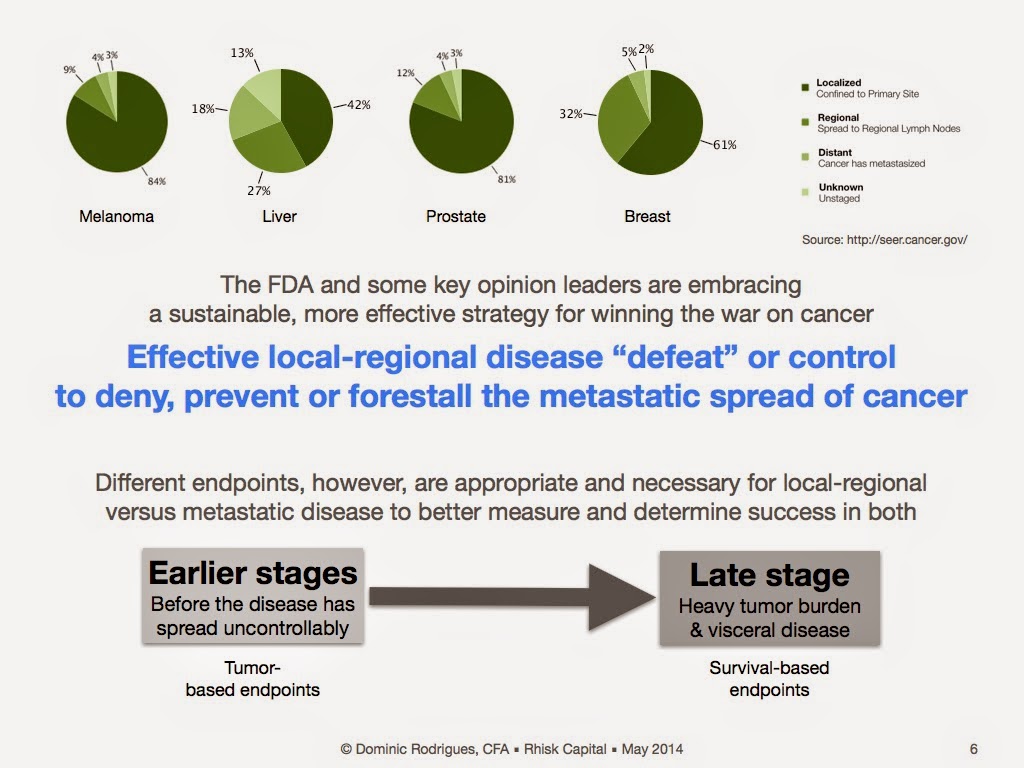
The article described Provectus' melanoma Phase 2 trial results and, in particular, the sub-group of patients who had all of their disease treated (i.e., injected with PV-10). Why was/is this relevant? As Fortenbury writes, "If PV-10, when injected in all the cancerous lesions of a melanoma patient for longer than 16 weeks, goes on to produce positive results in the next phase, it just may be a viable treatment option for many patients with aggressive, late-stage, locally advanced melanoma." The target population of the company's upcoming pivotal Phase 3 trial are patients with un-resectable locally advanced cutaneous melanoma, which means the melanoma (i) cannot be removed by surgery (non- or un-resectable), (ii) is located in or just under the skin (cutaneous and subcutaneous, respectively), and (iii) has not metastasized to distant sites like the lungs, liver or brain.

These patients need better options, like Eric, "...patients clearly need more options: single agent options and more options for finding successful combinations that can truly change the course of this vicious disease," and Dr. Agarwala, "I think it will be an option for many patients who have a cancer disease that’s localized or regional," were quoted in the Forbes article.

Locally advanced cutaneous (or subcutaneous) melanoma = Melanoma that has not spread or metastasized.

This is worth repeating: The upcoming pivotal Phase 3 trial will comprise Stage III patients. The disease in Stage III has not spread. Patients in which the disease has spread are Stage IV patients.

Stage III ≠ Stage IV.

▸ Conflation in the article occurs when Herper asks Fortenbury to have an "outside expert" opine: PD-1 Keytruda clinical investigator and UCLA Jonsson Comprehensive Cancer Center medical oncologist with multiple clinical interests Dr. John Glaspy, M.D., MPH is quoted. Medical oncologists (like Glaspy and PV-10 principal investigator Agarwala) see mainly stage IV patients, while surgical oncologists (like PV-10 principal investigator Dr. Merrick Ross, M.D. from MD Anderson Cancer Center ) see mostly stage III patients.

The data Fortenbury's article highlights show PV-10 as a monotherapy could be an important option for patients with locally advanced cutaneous melanoma. The FDA also appears to be considering this topic too. It announced on October 8th that "melanoma, specifically unresectable loco-regional disease" was a disease candidate for public comment. See Prescription Drug User Fee Act Patient-Focused Drug Development; Request for Comments (October 8, 2014) on the blog's News page.

Locally advanced cutaneous melanoma = Stage III = Melanoma disease has not spread  Stage IV = Metastatic melanoma with visceral disease and heavy tumor burden.

▸ Glaspy's words in the article:
John Glaspy, an oncology professor at UCLA, says that “it’s not clear” whether the result are important. If they are talking about lesions that were not directly injected with the drug, the results would be meaningful. “If they are talking about the injected lesion, not so much,” Glaspy says. 
When asked about it, he repeated: “Like I said, these SQ melanomas are an indolent disease, and it is not a big deal if you inject them and they regress.  I don’t think you have any evidence that anybody is cured.” {Underlined emphasis is mine}
It is not a big deal if tumors regress. They need to be destroyed. That's the big deal. Fifty percent of patients in the sub-group of Provectus' Phase 2 trial who had all of their disease treated achieved a complete response (total cancer disappearance) during a treatment period that was just 16 weeks.

Yervoy, Keytruda, Opdivo, MPDL3280A and MEDI4736 are far from curing melanoma patients because they are not achieving notable or memorable complete responses.

Partial response, not a big deal. Complete response, cured?

▸ One simple but I don't believe an over-simplistic way of looking at the situation could be surgical oncologists look at melanoma (and cancer at large) when it is first diagnosed or has not spread beyond control or has not metastasized. Medical oncologists look at melanoma (and cancer at large) when it has spread or looks like it is beyond control.

Surgical ocologists: PV-10. Medical oncologists: PV-10 + something else.

▸ Eric, in regards to, I believe, late-stage (Stage IV) patients (patients with distant metastases), in the Forbes article, "...more options for finding successful combinations that can truly change the course of this vicious disease," undoubtedly would have told Fortenbury about Moffitt Cancer Center presenting pre-clinical data on these combinations (i.e., PV-10 + [insert checkpoint blockade agent]) at the annual meeting of the Society for Immunotherapy of Cancer ("SITC") next week.

The idea behind combining PV-10 and a checkpoint blockader may be to generate both the specific and non-specific kinds or types of immune responses Coley's vaccine/toxins were believed to have generated. The goal of employing these kinds of combinations, to battle melanoma (cancer) once it has spread to distant sites, may be to generate both specific and non-specific immune responses.

Stage IV melanoma: PV-10 + one of (Yervoy, Keytruda, Opdivo, MPDL3280A, MEDI4736)

Yervoy, Keytruda, Opdivo, MPDL3280A, and MEDI4736 need help.

▸ Roche's Genentech's Dr. Daniel Chen, M.D., Ph.D. quoted Roche's Genentech's Dr. Ira Mellman, M.D., both co-authors of Oncology Meets Immunology: The Cancer-Immunity Cycle, at ESMO 2014:
Click to enlarge. Screen shot source: Biotech Strategy Blog.
The ultimate goal of cancer treatments is to completely eliminate a tumor. Complete response.

▸ Which brings me back to where I started this post, with Florey, Chain & Heatley, and Coley.

Dees, Scott and Wachter did not discover rose bengal. It can be traced back to Basel, Switzerland in 1882 when a German patent was granted to Ghnem for a new family of wool dyes. Dees et al. were not the first to use rose bengal in an oncology setting. Japanese researchers Ito and Watanabe did so in 1986. Rose bengal's therapeutic benefit is unrealized until a sufficient quantity is administered.

Craig postulated intratumoral injection, and thus the delivery of the drug via the tumor or lesion, was key. He thought it was critically important to the eventual immune response that PV-10 (rose bengal) be injected into a cancerous tumor or cancer metastases.

What kind of therapy is PV-10? From a 2013 Cancer Watch article entitled Back to Phase 1: Understanding Systemic Effects of PV-10:
Echoing [Moffitt Cancer Center's] Dr. Sarnaik, Eric Wachter, PhD, Provectus chief technology officer, said that he hopes that the findings of Dr. Sarnaik’s study will point toward rational judgments about combining PV-10 with other documented therapies. “We then might want to try two or more orthogonal therapies to stress tumor cells from several different angles simultaneously, for example an immune therapy plus a metabolic therapy (e.g., a kinase inhibitor), or in a rationally designed sequence.” In a hepatocellular carcinoma model, he added, PV-10 showed significant potential for synergy with 5-fluorouracil. Provectus recently initiated clinical testing of PV-10 with the multikinase inhibitor sorafenib, again bringing in two therapies with divergent mechanisms of action. 
Which category does PV-10 fall into? “I think we are getting a clearer picture of how it might be classified, but it has features of several previously unrelated categories, such as of adoptive cell transfer and vaccination,” Dr. Wachter said. “PV-10 initially reduces tumor burden through chemoablation—but then activates the immune system bringing in capacities completely orthogonal to the ablative tumor destruction,” he added. 
“Amod Sarnaik’s work may give us the molecular basis for closing the loop on one of the founding concepts for going into the clinic in the first place,” Dr. Wachter commented. “Back in the preclinical days at Provectus, Craig Dees, PhD, theorized that ablation of tumors with PV-10 might lead to unmasking of tumor antigenic material. I don’t think he anticipated that it would work as well as it does.” {Underlined emphasis is mine.}
Vaccines are too specific. They facilitate the expression of only one antigen. Vaccines are antigen specific.

CTLA-4, PD-1 and PD-L1 therapeutic agents are not specific enough. They do not facilitate the expression of enough antigens.

PV-10 ablation of tumors presumably leads to the generation of antigens that are presented to the immune system in (i) as large a number as possible, (ii) pristine and not un- or non-denatured shape, (iii) whole pieces and not fragments, (iv) correct conformation/the right shape, and (iv) the right context.

PV-10: A paradigm shift in the treatment of cancer

May 23, 2014

Provectus was denied breakthrough therapy designation by the FDA

Provectus's breakthrough therapy designation application was turned down by the FDA. The company issued a press release entitled Provectus Biopharmaceuticals Inc. Reaffirms Its Commitment to Bringing PV-10 to Market Notwithstanding FDA Decision on Breakthrough Therapy Designation. The associated SEC 8-K filing is here. The included FDA letter response or notice is here.

More analysis and commentary to follow.

Updated (5/24/14): The Memorial Day long weekend here in the U.S. provides an opportunity to spread my writing, analysis and commentary over several days (stock markets are closed on Monday). I want to digest Friday's news, collect more information, and prepare for Tuesday and presumably the rest of next week's likely substantial volatility in the share price (the stock did not open for trading yesterday). Topics should include Provectus' conference call* (and the FDA response letter), management credibility, pathways to approval, risks, the state of my investment thesis, my estimation of worth, and others.

* "A digital replay will be available by telephone approximately two hours after the completion of the call until July 23, 2014, and may be accessed by dialing 877-660-6853 from the U.S. or 201-612-7415 for international callers, and using the Conference ID#13583661."

May 13, 2014

Provectus Biopharmaceuticals

Click to enlarge.
Click to enlarge.
Click to enlarge.
Click to enlarge.
Click to enlarge.
Click to enlarge.
Click to enlarge.
Click to enlarge.
Click to enlarge.
Click to enlarge. 
Click to enlarge.
Click to enlarge.